
4 Costly Remodeling Mistakes (and How to Avoid Them)
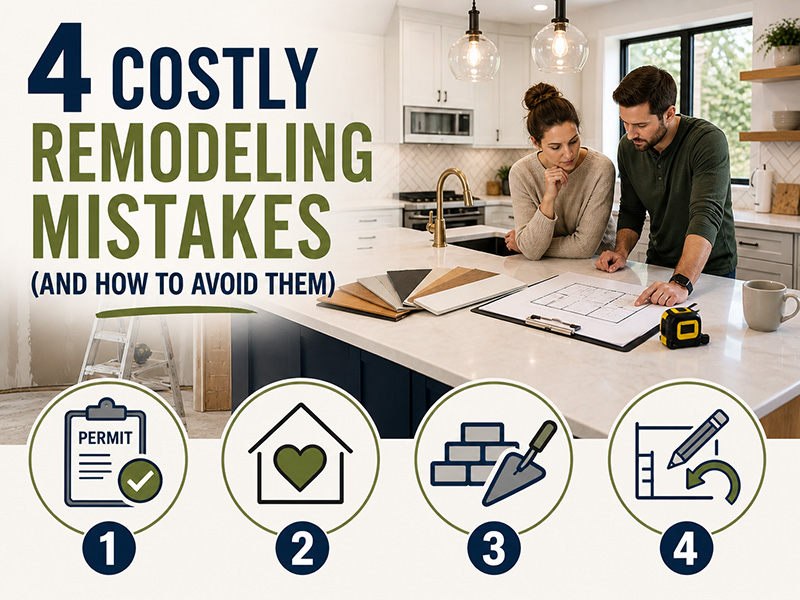 Remodeling your home can be one of the best ways to increase its value—and make your space actually work for your life. But let’s be honest: it can also go sideways fast if you’re not careful.
Whether you’re tackling a small update or a full renovation, avoiding a few common pitfalls can save you time, money, and a whole lot of stress.
Here are four mistakes homeowners make all the time, and how to steer clear of them.
Mistake #1: Skipping Permits (or Hoping No One Notices)
It’s tempting to skip permits to save time or money, but this is one of those shortcuts that can come back to bite you.
Unpermitted work can:
- Delay or derail a future home sale
- Lead to fines or required tear-outs
- Create safety risks if work isn’t up to code
What to do instead:
Before you start anything, check your local city or county requirements. A quick call or website visit can save you from a much bigger headache later.
Mistake #2: Designing for Trends Instead of Your Life
It’s easy to fall in love with what’s trending—open shelving, bold tile, ultra-modern everything. But trends don’t always age well… or function well.
The real question is: does this actually work for how you live?
What to do instead:
Design around your daily habits first.
- Do you cook often? Prioritize storage and workflow.
- Hate clutter? Maybe skip open shelving.
- Have pets or kids? Choose durable, forgiving materials.
Trends can be layered in, but your lifestyle should lead the decisions.
Mistake #3: Cutting Corners Where It Counts
Everyone has a budget, but going cheap in the wrong places can cost you more in the long run.
Low-quality materials and inexperienced labor can lead to:
- Repairs sooner than expected
- Hidden damage (like moisture issues or poor insulation)
- A finish that just… doesn’t hold up
What to do instead:
Spend wisely, not blindly.
Invest in:
- Skilled, reputable contractors
- Structural and behind-the-scenes components
- Materials that will actually last
If something is meant to protect your home (like waterproofing or electrical work), that’s not where you want to bargain hunt.
Mistake #4: Making Changes Mid-Project
This is the silent budget killer.
Changing plans once a project is underway often means:
- Reordering materials
- Paying for additional labor
- Delaying timelines (sometimes significantly)
Even small tweaks can ripple into bigger costs.
What to do instead:
Take your time before the project starts. Finalize your design, materials, and layout as much as possible.
Think of it like this: decisions made early are cheap—decisions made mid-project are not.
Plan Smart, Remodel Better
A successful renovation isn’t about perfection. It’s about making thoughtful, informed decisions from the start. By avoiding these common mistakes, you’ll not only protect your investment—you’ll end up with a space that actually works for you long-term.
And if you’re planning to sell down the road, smart upgrades (done the right way) can make a big difference in how your home is both perceived and valued.
 Buying a home is rarely just about the house. It is about life happening at the same time. Career changes, family growth, health decisions, and financial habits all quietly shape your mortgage experience long before you ever tour a property. Many buyers are surprised to learn that choices made months or even years earlier can influence how smooth or stressful the process feels.
 For homeowners looking to tap into the equity they have built over time, a Home Equity Line of Credit, also known as a HELOC, can be a flexible financing option. Unlike a traditional mortgage or one time loan, a HELOC gives borrowers access to a revolving line of credit that can be used as needed. Understanding how it works, along with the benefits and risks, can help homeowners decide whether it fits their financial goals.