
NAHB: Home Builder Confidence Holds Steady
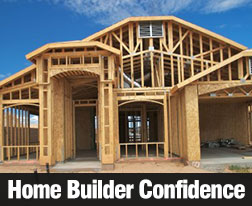 Home builder confidence remained steady at the highest reading in almost ten years according to the National Association of Home Builders (NAHB) Wells Fargo Housing Market Index for July. The latest reading of 60 for the index was identical to expectations and June’s reading, which was revised to 60 from an initial reading of 59. The NAHB Wells Fargo Housing Market Index is based on readings of zero to 100 with readings over 50 indicating that a majority of home builders surveyed are confident about housing market conditions. July’s reading was the 13th consecutive month of readings above 50.
July’s Housing Market Index Highest Since November 2005
NAHB chief economist David Crowe said that July’s reading is consistent with stronger markets for new and existing homes as well as job growth, but also noted builder concerns over obtaining lots for development and necessary labor at favorable prices.
The monthly reading for housing market condition is based on three components. Two components showed improvement with the reading for current market conditions up one point to 66; the reading for housing market conditions in the next six months gained two points for a reading of 72 and the reading for buyer foot traffic in new housing developments lost one point for a reading of 63.
Report Details Regional Market Conditions
NAHB’s three month moving average of regional builder confidence showed gains of one point in the South for a reading of 61; the Midwest also reported a gain of one point to 55. Builder confidence readings for the Northeast and West each gained three points to readings of 47 and 60 respectively.
NAHB chairman Tom Woods said that based on current readings, housing markets should continue to improve throughout the second half of 2015. Economic analysts agreed with this assessment and noted that evidence suggests that housing markets are seeing a steady upswing.
In unrelated reporting, the Department of Commerce is due to release reports on housing starts and building permits today.
 From the sales price to the general layout of the building, there are numerous factors that buyers will consider when touring homes. While there are specific factors that buyers may be searching for in a new house, there are also a few warning signs that home buyers should keep their eyes open for. The following are among the top red flags that may serve as warning signs.
 A mortgage application is typically several pages in length, and it requires you to provide a considerable amount of information about your personal, professional and financial life. Some mortgage applicants may not have access to all of the information when completing the application, and others may simply skim over the form and provide incomplete answers. These are only a few of the reasons why information on the mortgage application may not be accurate, but there are several key reasons why applicants should avoid giving inaccurate information.