
VA Construction Loans: What You Need to Know Before You Build
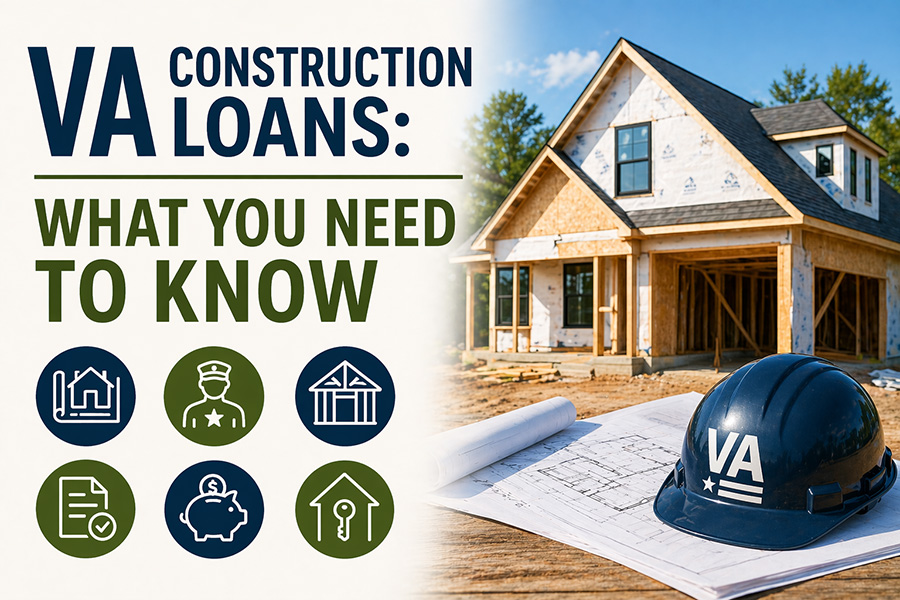 Building your dream home from the ground up? If you’re a veteran, active-duty service member, or eligible military spouse, a VA construction loan could make that process a lot more accessible.
But here’s the thing—VA construction loans aren’t quite as straightforward as traditional mortgages. Knowing how they work upfront can save you time, money, and a few headaches along the way.
Let’s break it down.
What Is a VA Construction Loan?
A VA construction loan helps cover the cost of:
- Purchasing land
- Building the home
- Transitioning into a long-term mortgage
In many cases, this is structured as a construction-to-permanent loan, meaning you go through one loan that converts into your mortgage once the home is complete.
(Some lenders still use a two-loan process—one for construction, one for the mortgage—so this is something to clarify early.)
Key Benefits (Why People Look Into It)
VA loans are popular for a reason, and those benefits can carry over into construction loans too.
- No down payment (in most cases)
One of the biggest advantages—especially when building, where upfront costs can stack up quickly. - No private mortgage insurance (PMI)
This can lower your monthly payment compared to many conventional loans. - Flexible credit guidelines
While you still need to qualify, VA loans tend to be more forgiving than some alternatives. - Competitive interest rates
Often lower than conventional loan options.
The Catch (Because There Always Is One)
VA construction loans can be harder to find than standard VA home loans.
Some common hurdles:
- Not all lenders offer them
- Builders must meet VA requirements and be approved
- The process can be more paperwork-heavy
Translation: it’s doable—but you’ll want a lender who actually knows what they’re doing here.
What You’ll Need to Apply
The process is similar to a traditional mortgage, with a few extra steps.
Expect to provide:
- Certificate of Eligibility (COE)
- Proof of income and employment
- Credit history and financial documentation
- Construction plans and builder details
Lenders will evaluate both you and the project itself.
One-Time Close vs. Two-Time Close
You’ll likely hear these terms—here’s the simple version:
- One-time close:
One loan, one closing. Converts automatically to your mortgage.
→ Simpler, fewer fees - Two-time close:
Separate loans for construction and mortgage
→ More flexibility, but more paperwork and closing costs
Your lender can help you decide which route makes the most sense.
Is a VA Construction Loan Right for You?
It can be a powerful option—but it’s not always the easiest path.
It tends to work best if:
- You want to build (not buy existing)
- You qualify for VA benefits
- You’re working with a builder familiar with VA requirements
- You’re okay with a slightly more involved process
If that’s you, this can open the door to building a home without the typical upfront financial burden.
Final Thoughts
VA construction loans can be an incredible benefit, but they’re not as plug-and-play as traditional loans.
The biggest difference-maker? Working with the right lender and builder from the start.
If you’re considering building, it’s worth having a conversation with a knowledgeable mortgage professional who can walk you through your options and help you decide if this path fits your goals.
 First responders and military families play vital roles in our communities, and there are mortgage programs designed to recognize their service. These programs often provide favorable terms, lower down payments, and unique benefits that make homeownership more accessible. Understanding these options can help heroes and their families achieve their dream of owning a home while taking advantage of benefits tailored to their service.
 The VA loan program offers exceptional benefits to veterans, active-duty service members, and eligible surviving spouses, including no down payment, competitive interest rates, and no private mortgage insurance (PMI). But what about buying land? While the rules around using a VA loan for land can be more complex, there are still ways to make it work. Here’s a breakdown of your options if you’re looking to buy land using a VA loan.