How Adjustable-Rate Mortgages Work and When They Make Sense
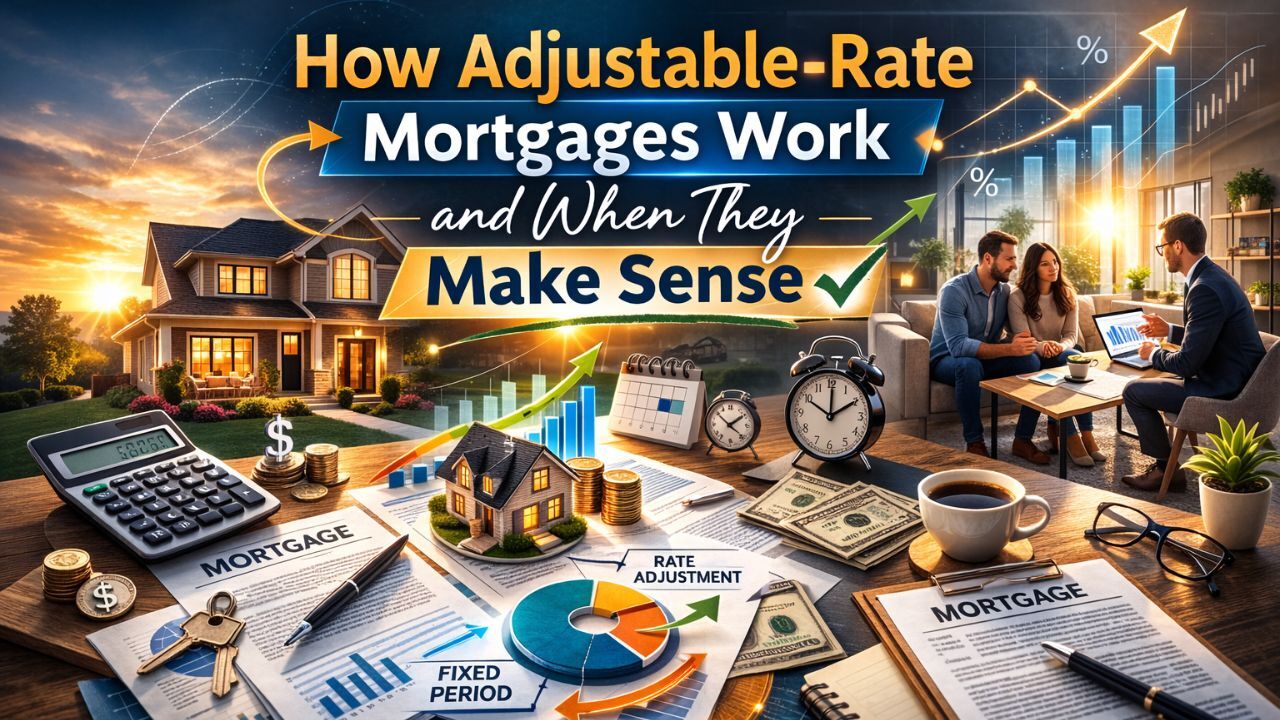
Adjustable-rate mortgages often create hesitation because borrowers focus on the word adjustable. However, these loans can serve a strategic purpose when aligned with specific financial timelines.

An adjustable-rate mortgage typically offers a fixed introductory period followed by periodic rate adjustments based on market indexes. Understanding how these loans are structured helps borrowers determine whether the flexibility outweighs potential variability.

How the Structure Works
An adjustable-rate mortgage generally begins with a fixed rate period, often five, seven, or ten years. After this introductory phase, the rate adjusts at scheduled intervals according to a benchmark index plus a margin. Most adjustable loans include caps that limit how much the rate can increase at each adjustment and over the life of the loan. Reviewing these caps is critical before choosing this structure.

When Short-Term Ownership Aligns
Borrowers who plan to sell or refinance within the fixed period may benefit from the lower introductory rate. If the property is not intended as a long-term residence, locking into a thirty-year fixed rate may not always be necessary. Matching the loan term to the anticipated ownership timeline can reduce overall borrowing costs.

Income Growth Considerations
Some borrowers expect steady income growth over time. In those cases, an adjustable rate may provide lower initial payments while income increases. However, this strategy requires conservative planning. Borrowers must evaluate worst-case scenarios and confirm they could manage higher payments if rates rise.

Risk Management Matters
Adjustable loans are not speculative tools. They require discipline and a defined exit strategy. Borrowers should evaluate savings reserves, refinancing options, and market conditions before committing. Stress testing the potential payment increase provides clarity.

An adjustable-rate mortgage can be appropriate when aligned with a clear timeline and financial strategy. If you want to review whether this loan structure supports your long-term plan, reach out to evaluate your mortgage options with precision.

The Impact of Interest Rate Changes on Your Mortgage Payment Over Time

When it comes to mortgages, interest rates play a crucial role in determining your monthly payments and the total cost of your loan. While fixed-rate mortgages offer stable payments, adjustable-rate mortgages (ARMs) can fluctuate with market conditions, leading to significant variations in your financial obligations over time. Understanding how interest rate changes impact your mortgage can help you better prepare for the future.
Fixed-Rate vs. Adjustable-Rate Mortgages

Fixed-rate mortgages offer a consistent interest rate throughout the life of the loan. This stability means your monthly payment remains unchanged, providing predictability and ease of budgeting. However, the trade-off is that fixed-rate loans often start with higher rates compared to the initial rates of ARMs.

Adjustable-rate mortgages (ARMs), on the other hand, have interest rates that adjust periodically based on market conditions. ARMs usually come with an initial fixed-rate period, after which the rate changes at set intervals, such as annually. The fluctuations in ARMs can significantly impact your monthly payments and overall loan cost.

How Interest Rate Changes Affect Your Payments

  1. Initial Period Changes: Most ARMs start with a lower interest rate than fixed-rate mortgages, which can make them attractive to borrowers looking for lower initial payments. For instance, an ARM with a 3% initial rate might offer lower payments compared to a fixed-rate mortgage at 4%. However, after the initial period—often 5, 7, or 10 years—the rate adjusts based on a specified index plus a margin set by the lender.
  2. Adjustment Periods: When the rate adjusts, it can lead to significant changes in your monthly payments. For example, if your ARM adjusts from 3% to 5%, your monthly payment will increase accordingly. This change can be substantial, especially if the loan term is long or if rates rise significantly.
  3. Rate Caps: ARMs typically have caps that limit how much the interest rate can increase at each adjustment period and over the life of the loan. While these caps provide some protection, they do not eliminate the risk of higher payments. For example, if your ARM has a cap of 2% per adjustment period, your rate could increase by 2% at each adjustment, potentially leading to higher payments over time.

Financial Impact Scenarios

  1. Rising Interest Rates: In a scenario where interest rates rise steadily, an ARM can become increasingly expensive. If you started with a 3% ARM and rates rise to 6%, your payments will rise accordingly. For a $300,000 loan, this could mean an increase from approximately $1,264 to $1,798 per month after the initial fixed period, translating to an additional $535 per month or $6,420 per year.
  2. Stable or Declining Rates: Conversely, if interest rates remain stable or decline, an ARM may still offer lower payments compared to a fixed-rate mortgage. For example, if your ARM’s rate stays at 3% or falls slightly, you could benefit from lower payments compared to the fixed rate’s higher payments.
  3. Long-Term Costs: Over the life of the loan, ARMs can sometimes end up costing more than fixed-rate mortgages if interest rates rise significantly. For instance, over a 30-year term, frequent rate increases can add up, resulting in a higher total loan cost compared to a fixed-rate mortgage with a higher, but stable, interest rate.

Understanding how interest rate changes affect your mortgage payments is crucial for managing your financial future. While ARMs can offer lower initial rates and payments, they come with the risk of increased payments as rates adjust. Fixed-rate mortgages provide stability but might start with higher rates. By considering your long-term financial goals and potential interest rate trends, you can make an informed decision that aligns with your financial situation and risk tolerance.

Consider an Adjustable-Rate Mortgage If You Plan to Sell Within 5 Years

Which is better — a fixed-rate mortgage or an adjustable-rate mortgage (ARM)? It’s a common question among home buyers and refinancing households. The answer? It depends.

Fixed-rate mortgages offer the certainty of a known, unchanging principal and interest payment for the life of the loan. This stability can aid in budget-setting and financial planning, providing homeowners with a sense of security and peace of mind.

On the other hand, adjustable-rate mortgages do not provide the same level of certainty. After an initial introductory period, the interest rate on the loan adjusts periodically based on prevailing market conditions. While this uncertainty may deter some, ARMs often feature very low initial interest rates compared to fixed-rate loans.

These savings make adjustable-rate mortgages particularly appealing for individuals in specific scenarios:

Short-Term Ownership Plans: If you intend to sell your home within 5 years, opting for a 5-year ARM could be advantageous. The lower initial payments can help maximize your cash flow during the ownership period.

Current Fixed-Rate Mortgage Holders: Homeowners currently financed with a 30-year fixed mortgage who plan to sell within 5 years might find switching to a 5-year ARM beneficial, especially if they’re seeking lower payments.

Comfort with Uncertainty: If you’re comfortable with payment uncertainty over the long term and prioritize lower initial payments, an adjustable-rate mortgage may align well with your financial goals.

Additionally, homeowners with existing ARMs nearing adjustment may consider refinancing into a new ARM to extend the teaser rate period and delay potential payment increases.

However, before committing to an adjustable-rate mortgage, it’s crucial to consult with your loan officer to fully understand how ARMs function and the associated risks, both in the near and long term. While the initial payment savings can be tempting, it’s important to recognize that with an ARM, payment structures are subject to change.

For individuals planning to sell their homes within 5 years or those seeking lower initial payments and are comfortable with payment uncertainty, an adjustable-rate mortgage can be a strategic financial choice. However, thorough research and consultation with financial professionals are essential to ensure that the selected mortgage aligns with your long-term financial objectives.